On Loss, Shift, and Material Memory

I shot a roll of 11-year-old KONO! Reanimated Donau, ISO 6.
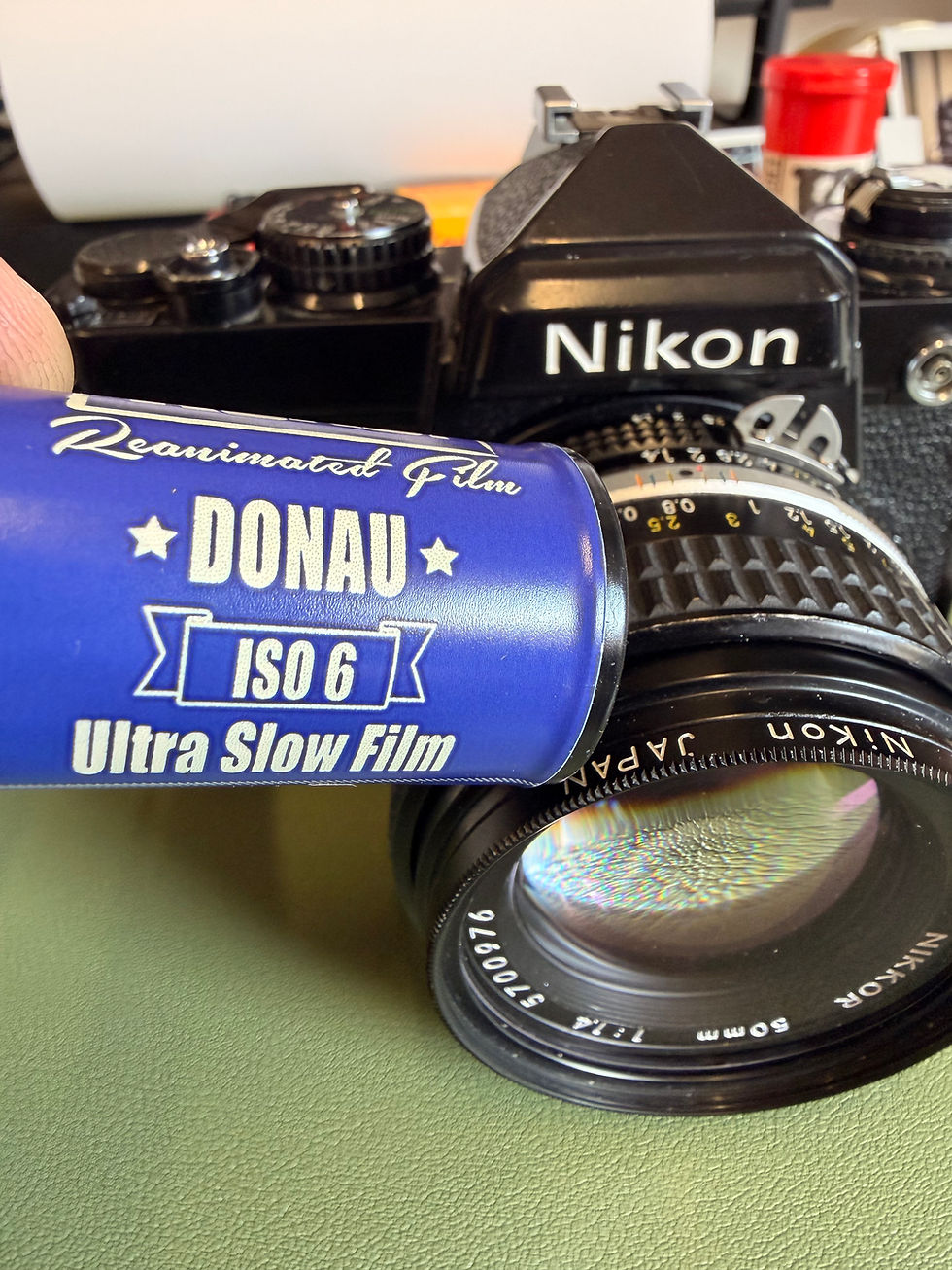
It’s a film known for cool blue tones, soft luminosity, a certain distance from the world it records. That’s its reputation. That’s the expectation you carry when you load it.
But this roll hadn’t been stored well. Eleven years had done their work, slowly, invisibly. Heat, fluctuation, neglect. Nothing dramatic. Just time, doing what it does to materials left unattended.
And what came back wasn’t blue.
It was orange. Thick, hazed, and heavy with warmth.
The images feel less like they were taken and more like they’ve been remembered. Faces drift slightly out of reach. Highlights bloom into something indistinct.
Analogue photography is often framed around control, exposure, chemistry, precision. But that’s only part of it. The other part is surrender.
Film ages. Emulsions shift. Colour layers separate from what they once were. What was balanced becomes uneven. What was intended becomes something else entirely. In this case, whatever produced those expected blue tones has slipped away, leaving behind this amber residue, like the film has forgotten part of itself and leaned fully into what remains.
There’s something honest in that.
Digital images don’t do this. They don’t absorb years. They don’t respond to heat or neglect. They don’t quietly transform in the dark. They remain fixed, unless we choose to alter them.
Film doesn’t ask.
It changes anyway.
What these images hold isn’t accuracy in the conventional sense. They don’t reflect the scene as it was, at least not in a way we’d recognise. But they do carry something else, a record of time passing through a material. A trace of storage, of handling, of conditions unknown.
They are not just photographs of a moment.
They are photographs of what has happened to the film itself.
There’s a temptation to correct this. To neutralise the colour, to bring it back toward something recognisable. But doing so would strip away the very thing that makes these images what they are now.
This is not the film as it was designed.
This is the film as it exists.
And maybe that’s closer to the truth of analogue photography, not as a fixed record, but as a negotiation between intention and…whatever else happens.

Comments